
Navigating European Travel and Insurance Rules
Europe is a dream destination for millions of travelers every single year. Whether you are planning to eat your way through Italy, explore the historic streets of Prague, or do a massive multi-country train tour, the logistics of a European vacation can get complicated fast.
One of the biggest hurdles for many international travelers is navigating the visa process. If you need a visa to enter Europe, you also need a very specific type of health insurnace. The consulates are incredibly strict about this, and showing up to a visa interview with the wrong insurance document is a guaranteed way to get your application denied.
Even if you are lucky enough to hold a passport that doesn’t require a visa right now, the rules are changing, and having the right medical coverage in Europe is still essential. Let’s dig into what the Schengen Area is, what Schengen travel insurnace requires, and how you can make sure you are fully covered for your trip.
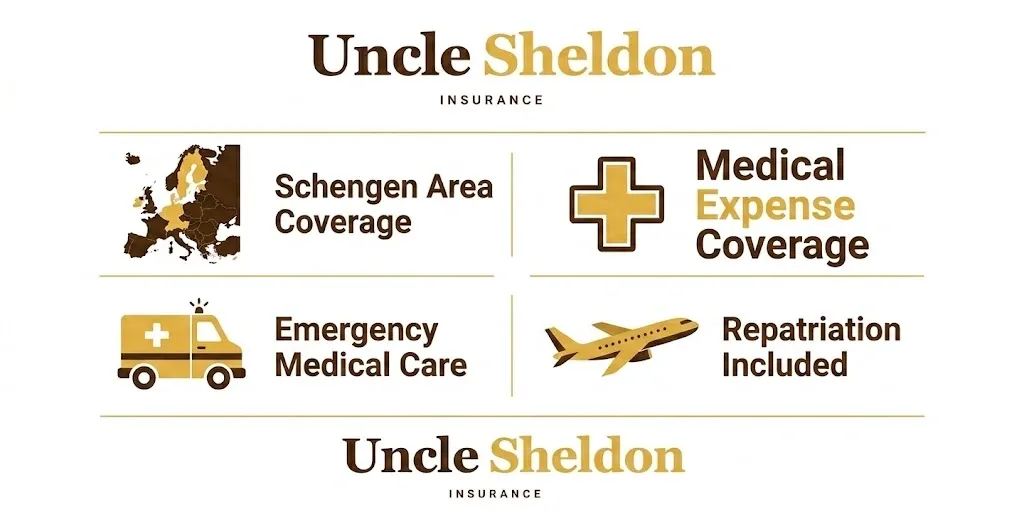
What Exactly is the Schengen Area?
Before we talk about the insurance, we need to talk about the geography. The Schengen Area is a zone encompassing 27 European countries that have officially abolished passports and all other types of border control at their mutual borders.
For travelers, this is amazing. It means you can fly into Paris, rent a car, drive to Germany, take a train to Austria, and end up in Italy, all without ever stopping at a border checkpoint or showing your passport. It functions almost like a single country for international travel purposes.
The member states include most of the heavy hitters in European tourism like France, Germany, Italy, Spain, Greece, Switzerland, the Netherlands, and many others.
It is important to note that the Schengen Area is not the same thing as the European Union. Some EU countries are not in the Schengen zone, while some non-EU countries are. If you are traveling through Europe, you need to check the specific status of every country on your itinerary.
Who Needs Schengen Visa Travel Insurance?
This is where things get specific based on your nationality.
If you hold a passport from a country that does not have a visa-free agreement with the Schengen Area, you are required to apply for a Schengen Visa before you travel.
As a mandatory part of that visa application, you absolutely must prove that you have purchased travel medical insurance that meets their strict requirements. If you do not have the insurance letter, they will not even process your visa.
If you are a US citizen, a Canadian citizen, or a citizen of another visa-exempt country, you currently do not need a visa for short tourist trips. Because you don’t need the visa, you are not legally forced to carry Schengen travel insurance to enter the border.
However, just because it isn’t legally mandated doesn’t mean you shouldn’t have it. If you get injured in the Swiss Alps or come down with appendicitis in Spain, your US health insurance is likely useless. The European healthcare system is fantastic, but it is not free for non-residents. You will be billed for your care, and having a solid travel medical plicuy is the only way to protect yourself from massive out of pocket costs.
Plus, with the upcoming ETIAS rolling out soon for US citizens, border entry requirements are tightening up, and having proof of medical coverage is always a smart move when dealing with international border agents.
The Mandatory Schengen Insurance Requirements
If you are applying for the visa, you can’t just buy any cheap travel insurance policy you find online. The Schengen member states have established a very specific set of requirements that your policy must meet.
If your policy misses even one of these criteria, the consulate will reject your visa application.
1. Minimum Coverage of 30,000 Euros
Your policy must provide a minimum of 30,000 Euros in medical coverage. This is the absolute floor. It ensures that if you end up in a European hospital, the policy is large enough to cover the local costs of emergency care.
2. Valid in ALL Schengen Member States
Your insurnace must be valid across the entire Schengen Area, not just the country you are applying to. Even if your entire two week trip is solely in France, the insurance document must explicitly state that it covers the entire Schengen Area. The consulates want to know that if you decide to hop on a train to Belgium for a day, you are still covered.
3. Covers Medical Evacuation and Repatriation
This is a non-negotiable requirement. The policy must explicitly cover the cost of emergency medical evacuation, transporting you to a better hospital or back to your home country if you are severely ill, as well as the repatriation of remains in case of death. The consulates are very strict about seeing this specific wording on your visa letter.
4. Zero Deductible
While the official EU guidelines don’t always explicitly ban deductibles, many individual embassies and consulates strongly prefer or outright demand a zero deductible policy. A deductible is the amount you pay out of pocket before the insurance kicks in. Consulates want to ensure that if you need minor care, you won’t avoid the doctor because you can’t afford the deductible. To be safe, it is highly recommended to buy a plan with a zero dollar deductible when applying for a Schengen visa.
Understnad the Visa Letter
When you buy a travel medical policy, the insurance company will send you a massive document with all the terms and conditions. The embassy does not want to read a 50 page legal document.
What you need is the Visa Letter or Declaration of Coverage.
This is a one or two page document provided by the insurance company specifically designed for embassy workers. It clearly lists your name, your travel dates, and has bullet points confirming that the policy meets the minimums, covers repatriation, and is valid in the Schengen zone.
When you buy your policy, make sure the provider explicitly offers a Schengen Visa Letter. You will print this out and include it with your application packet. If the letter is missing any of the required phrasing, your visa processor will flag it.
How Much Does Schengen Insurance Cost?
People often assume that because it is a strict government requirement, the insurance must be wildly expensive. The reality is quite the opposite.
Basic travel medical insurance that meets the Schengen requirements is actually very affordable. For a healthy traveler in their 30s taking a two week trip to Europe, a compliant policy might only cost a small amount.
The price goes up based on a few factors.
- Your Age: As you get older, the risk of medical issues increases, so the premiums rise. Travelers over 65 or 70 will see higher rates.
- Trip Duration: A 90 day backpacking trip will cost more to insure than a 10 day vacatino.
- Coverage Limits: If you decide to buy higher coverage limits instead of the minimum 30,000 Euros, the price will bump up. And to be honest, bumping up the coverage is highly recommended, as the minimum goes fast if you need major surgery.
What Happens if Your Visa is Denied?
Applying for a Schengen visa is stressful, and unfortunately, denials do happen. You might be missing a document, your bank statements might not show enough funds, or the consulate officer might just not be convinced of your intent to return home.
Because you have to show proof of insurance when you apply, you have to buy the policy before you even know if you are allowed to take the trip.
If your visa gets denied, what happens to the money you spent on insurance?
Most reputable travel insurnace companies offer a visa denial refund policy. If your visa is rejected, you can send the company a copy of the official denial letter from the embassy before your policy start date, and they will refund your premium in full. When you are shopping for a policy, always verify that they have this refund option in their terms.
Pre-Existing Medical Conditions in Europe
If you have a chronic illness, a heart condition, or are managing diabetes, you need to pay very close attention to how your Schengen policy handles pre-existing conditions.
Many of the cheapest, basic travel medical plans exclude pre-existing conditions entirely. If you buy one of these plans, the embassy will accept it, and you will get your visa. However, if you have a medical emergency in Europe related to your pre-existing condition, the insurance company will deny the claim, and you will be stuck with the hospital bill.
If you have medical history, you should look for a comprehensive travel insurance plan that includes a Pre-Existing Condition Waiver. As long as you buy the policy shortly after your initial trip deposit and are medically cleared to travel, the waiver ensures that your existing conditions are covered just like any new illness.
The Reality of European Healthcare for Tourists
There is a common misconception among American travelers that because Europe has socialized healthcare, the hospitals are free for everyone.
This is not true.
The healthcare systems in countries like France, Germany, and the UK are funded by the taxes of their residents. If a French citizen goes to a public hospital in Paris, their care is covered by the state.
If a tourist from Texas goes to that exact same hospital in Paris, they are a private, out of network patient. The hospital will treat you, European hospitals provide excellent care and won’t turn away an emergency, but they will hand you a bill when you are discharged.
While European healthcare costs are generally much lower than what we see in the United States, a week in a hospital with surgery can still easily rack up tens of thousands of dollars in bills. If you don’t have travel medical coverage, that debt is entirely on your shoulders.
Furthermore, if you need to be medically evacuated back to the US, which often requires a private jet with a medical team, that cost is entirely private and can exceed massive amounts.
Dealing with Medical Emergencies in the Schengen Zone
If you find yourself sick or injured in a Schengen country, the protocol is slightly different than back home.
If it is an absolute life-or-death emergency, the universal emergency number in Europe is 112. Dialing 112 from any phone will connect you to emergency services.
Once you are stable, the very next call you need to make is to your travel insurnace providers global assistance hotline.
Do not try to navigate the foreign hospital billing department on your own. The assistance hotline will open a case file, provide translation services if the doctors don’t speak English, and work to set up a Guarantee of Payment with the hospital.
In some smaller clinics or pharmacies, they might require you to pay upfront for minor things like antibiotics or a basic doctor consultation. If that happens, make sure you get an itemized receipt with the diagnosis so you can file a claim for reimbursement when you get back to your hotel or back home.
Making Sure You Are Prepared
Planning a European trip should be exciting, not bogged down by anxiety about visas and medical emergencies.
If you need a Schengen visa, buying the right insurance is just a box you have to check. But don’t just treat it as a bureaucratic hurdle. Treat it as actual protection for your physical and financial well being.
Make sure the policy explicitly hits the minimums, covers repatriation, and is valid across the whole Schengen zone. Print out that visa letter, put it in your application folder, and head into your consulate appointment with confidence. And even if you don’t need the visa, getting covered is the smartest thing you can do before you cross the Atlantic.