
Weddings Are Expensive — And a Lot Can Go Wrong
The average wedding in the United States costs tens of thousands of dollars. When you add up the venue, the catering, the photographer, the florist, the band or DJ, the dress, the cake, the honeymoon deposits — it adds up fast. For a lot of couples and families, a wedding is one of the largest single financial events they’ll ever plan.
And weddings involve a lot of moving parts. Vendors. Guests. Venues. Weather. Timing. When something goes sideways — a vendor goes out of business, severe weather forces a postponement, someone gets sick — the financial fallout can be really painful on top of an already stressful situation.
That’s what wedding insurance is for. It’s not about expecting the worst. It’s about protecting a big investment against things that are genuinely out of your control.
What Wedding Insurance Actually Covers
Wedding insurance typically comes in two main flavors — event cancellation and postponement coverage, and wedding liability coverage. Some policies bundle both, some are sold separately. It depends on the insurer and what you’re looking for.
Event Cancellation and Postponement
This is the coverage that protects your financial investment in the wedding itself. If you have to cancel or postpone the wedding because of a covered reason, this coverage reimburses your non-refundable deposits and prepaid expenses.
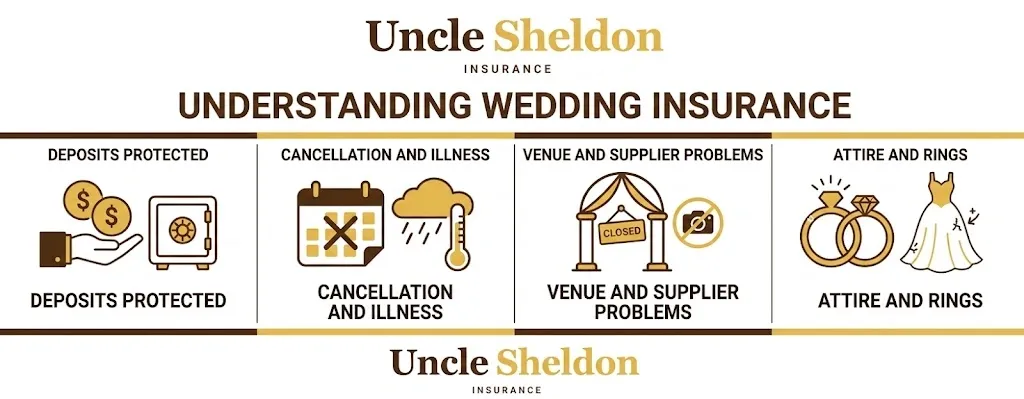
Covered reasons vary by policy but generally include things like
- Severe weather that makes it impossible to hold the event or for guests and key participants to travel safely
- A vendor going out of business or failing to show up
- Serious illness or injury to the couple or immediate family members
- A venue suddenly becoming unavailable due to damage or closure
- Military deployment that wasn’t expected at the time of booking
- Death of an immediate family member
The keyword to pay attention to is “covered reason.” Just like travel insurance, standard event cancellation coverage requires the reason for cancellation to fall within what the policy specifies. Cold feet is not a covered reason. Deciding you’d rather have a smaller wedding isn’t covered. If you want flexibility to cancel for any reason, some policies offer a Cancel For Any Reason upgrade — it costs more and typically reimburses a percentage rather than the full amount, but it gives you much more flexibility.
Wedding Liability Insurance
Wedding liability coverage protects you if someone is injured at your wedding or if property is damaged at the venue. This is actually the coverage a lot of venues require before they’ll let you host an event there.
If a guest slips on the dance floor and breaks their arm, or someone accidentally knocks over a sculpture at the venue, your wedding liability policy responds to those claims. Some policies also include host liquor liability — important if you’re serving alcohol — which covers claims that arise from a guest who becomes intoxicated at your event and then causes an injury or accident.
Venue owners ask for proof of liability coverage because they don’t want to be on the hook for something that happens at a private event they just rented the space for. If you’re hosting a wedding at a dedicated event venue, there’s a good chance they’ll require a certificate of insurance showing liability coverage before you sign the contract.
What Wedding Insurance Typically Doesn’t Cover
Being clear about exclusions matters, so here are some common ones.
Change of heart. If the couple simply decides not to get married, that’s not a covered claim under standard cancellation policies.
Pre-existing vendor problems. If you booked a vendor who was already showing signs of financial trouble or had known issues before you purchased the policy, a claim related to that vendor may not be covered. Buying wedding insurance early — before any problems arise — is always better.
Extreme weather you could have anticipated. Policies typically cover severe, unexpected weather events. If you planned an outdoor wedding in South Florida during hurricane season, a weather claim might be more complicated depending on the policy language.
Illness related to a known pre-existing condition. Similar to health and travel insurance, if someone has an existing medical condition and the wedding has to be cancelled because of it, that may or may not be covered depending on the policy.
Vendor disputes. Wedding insurance isn’t a substitute for good vendor contracts. If you have a dispute about the quality of services delivered, that generally isn’t a cancellation insurance claim — that’s a contract and small claims matter.
A Look at What’s Usually Covered vs Not
| Generally Covered | Generally Not Covered |
|---|---|
| Venue suddenly closes or is damaged | Couple changes mind |
| Vendor no-show or goes out of business | General vendor disputes |
| Severe weather forcing postponement | Weather you could have predicted seasonally |
| Serious illness or injury to immediate family | Pre-existing conditions (varies by policy) |
| Military deployment | Cold feet |
| Venue requires guest to leave early | General dissatisfaction with how day went |
| Liability for guest injuries | Damage caused intentionally |
| Host liquor liability (often) | BYOB events (varies) |
How Much Does Wedding Insurance Cost
Wedding insurance is one of the more affordable event insurance products given the amount of financial exposure it protects. The cost depends on factors like
- The total insured value of the wedding (your deposits and prepaid expenses)
- The level of liability coverage you’re carrying
- Where the wedding is being held
- Whether you’re adding optional coverages like Cancel For Any Reason
A basic liability policy for a wedding can start at a pretty modest cost. Cancellation coverage is priced based on the total value you’re insuring — the more you have at stake financially, the higher the premium. But relative to the cost of the wedding itself, the premium is usually a small fraction of what you’ve already spent on deposits alone.
It’s worth getting an actual quote based on your specific wedding budget and setup rather than going off general estimates. Pricing is specific enough to your situation that general ranges can be misleading.
When to Buy Wedding Insurance
The earlier the better. As soon as you start putting down deposits and signing vendor contracts, you have real financial exposure. The day you write that first deposit check to a venue or a photographer is the day you should be thinking about wedding insurance.
Waiting until a few weeks before the wedding to buy insurance is better than nothing, but you lose coverage for things that happen in the months leading up to the event. If a vendor goes out of business three months before your wedding and you don’t have insurance in place yet, that’s not a covered claim.
Most insurers also won’t let you buy cancellation coverage after a loss has already started occurring. If a major storm is already heading toward your venue, buying insurance at that point isn’t going to help you. You need the policy in place before the problem arises.
Does Your Venue Require It
More and more venues are requiring wedding liability insurance as part of their rental agreement. Dedicated event spaces, hotels, historic properties, country clubs, outdoor venues — requiring a couple to carry liability coverage is becoming standard practice in the industry.
If your venue requires it, they’ll usually tell you the minimum coverage limits they want and ask for a certificate of insurance naming them as an additional insured. Your insurance agent can provide that certificate once the policy is in place.
Even if your venue doesn’t require it, the liability protection is worth having. Weddings involve a lot of people, alcohol, dancing, and sometimes outdoor environments where slips and falls happen. One injury claim without coverage could end up costing far more than the insurance would have.
The Honeymoon Question
Wedding insurance generally covers the wedding event itself — the ceremony and reception. The honeymoon is a separate trip with its own potential risks, and travel insurance is the right product to cover that. If you’re booking a honeymoon trip with non-refundable deposits, especially an international trip, travel insurance for the honeymoon makes a lot of sense alongside your wedding insurance.
We can help with both. Uncle Sheldon works with travel insurance products as well as wedding and event coverage, so if you want to get both handled in one conversation, we’re here for that.
Jewelry Coverage
The engagement ring and wedding bands are a separate consideration. Homeowners and renters insurance policies do cover jewelry but usually have sub-limits — often $1,500 or less — for jewelry specifically, which likely isn’t enough to cover meaningful rings.
Adding a jewelry rider or scheduling the rings separately on your homeowners or renters policy is the right move. Some jewelers offer insurance directly, and there are also standalone jewelry insurance policies. If you haven’t looked at this separately from your wedding insurance, it’s worth a quick conversation.
Working With Uncle Sheldon on Wedding Insurance
Good ol’ Uncle Sheldon is here for the wedding planning stress you didn’t sign up for. We work with real carriers, can help you figure out what coverage you actually need, and won’t make you feel like you’re talking to a robot at the other end of the line.
Whether you need liability coverage because your venue is requiring it, you want cancellation protection for a big destination wedding, or you just want to talk through what makes sense for your budget — reach out to us. We’re independent, which means we work with multiple markets and aren’t pushing one company’s product.
Wedding planning is already a lot. Getting the right insurance in place shouldn’t add to the headache. We’ll keep it simple and make sure you understand what you’re getting.