
Term Life Insurance for Entreprenuers
Nobody really wants to sit around and talk about life insurnace. It is one of those topics that forces us to think about the worst case scenario. But if you have people who depend on you financially, having the right coverage in place is probably one of the most important things you can do for them.
When you start looking into life insurance, the options can feel overwhelming. There are so many different types of policies out there, but for the vast majority of families, term life insurance is the most practical and affordable option. It is straightforward, it does exactly what it says it will do, and it doesn’t try to be a complicated investment product at the same time.
Let’s break down exactly what term life insurance is, how it functions, and what you need to think about before you sign on the dotted line. Our goal here is to just give you the straight facts so you can make an educated decision for your famliy.
How Does Term Life Insurance Actually Work?
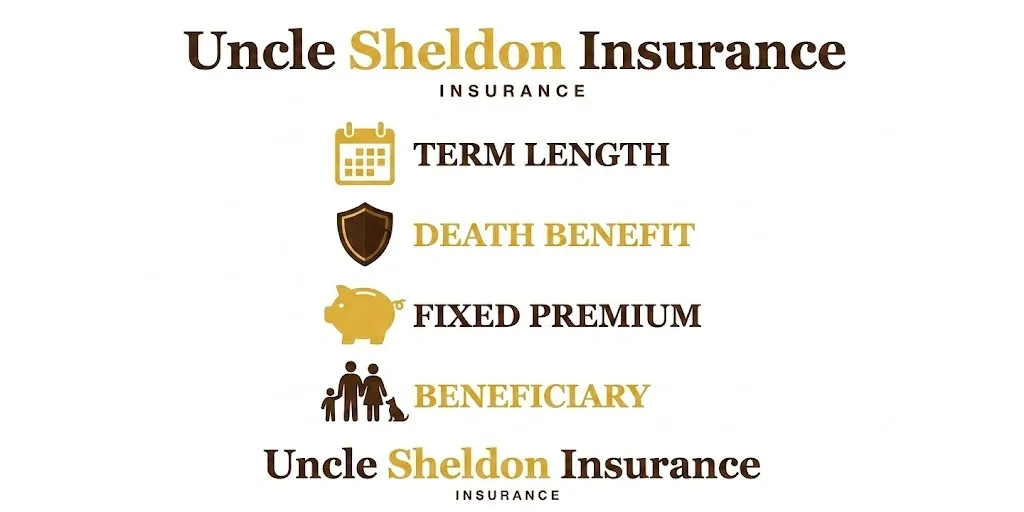
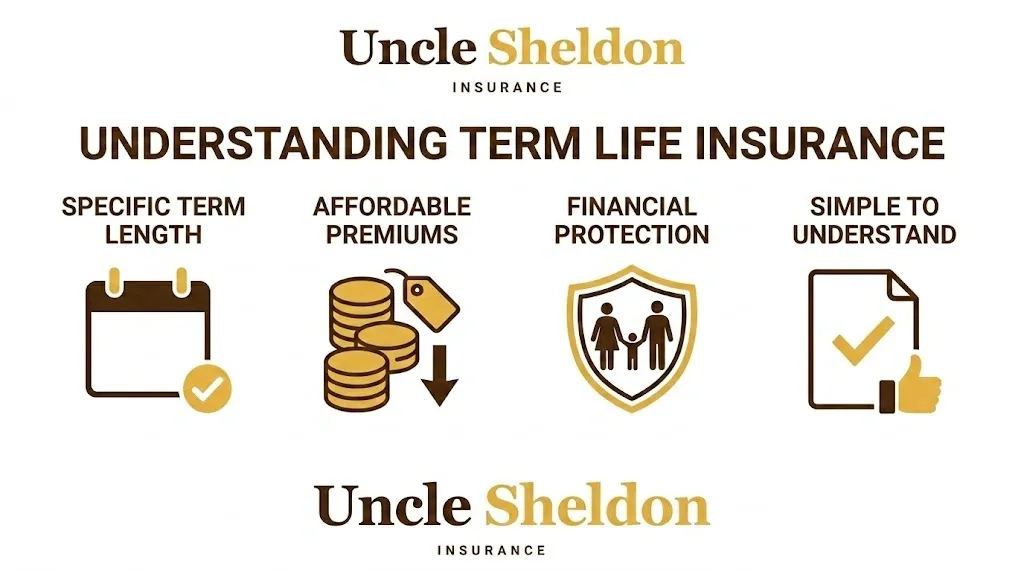
At its core, term life insurance is a very simple concept. You purchase a plicy for a specific period of time—that is the “term.” If you pass away during that specific term, the insurance company pays a tax free lump sum of money to the people you chose as your beneficiaries. If you outlive the term, the policy simply ends and the coverage stops.
Think of it kind of like renting an apartment versus buying a house. When you rent, you are paying for a place to live for a set period of time. You don’t build equity, but it is much cheaper than a mortgage. Term life insurnace works the same way. You are renting coverage for the years when your family is most financially vulnerable.
Most people buy term life insurance to cover specific financial obligations that have a timeline. For example, if you just bought a house with a 30 year mortgage, a 30 year term policy ensures that if something happens to you before the house is paid off, your family won’t lose their home. Or if you have young kids, a 20 year term policy can provide financial security until they are grown and out of the house.
The beauty of term insurance is that your premium is locked in for the entire length of the term. If you buy a 20 year policy when you are healthy and 30 years old, you will pay the exact same amount when you are 49, regardless of what happens to your health in the meantime.
The Big Debate Between Term and Whole Life Insurance
If you have started researching life insurance, you have probably run into the debate between term life and permanent life insurance, which is usually referred to as whole life. This is where a lot of people get confused, and honestly, it is where a lot of aggressive sales tactics happen in the industry.
Here is the straightforward truth. Term insurance provides temporary coverage for a set period of time, while whole life insurance is designed to provide coverage for your entire life, as long as you keep paying the premiums.
Because whole life insurance is guaranteed to pay out eventually (assuming you don’t cancel it), it is significantly more expensive than term insurance. We are talking five to ten times more expensive for the exact same amount of coverage.
Whole life policies also include a cash value component. A portion of your premium goes toward building this cash value, which grows over time and can be borrowed against. Because of this, some agents pitch whole life as an investment vehicle.
However, for most everyday families, mixing insurance and investments isn’t the most efficient way to grow wealth. The fees on whole life policies can be high, and the returns on the cash value are often lower than what you could get in a basic index fund.
The strategy that makes the most financial sense for most people is called buy term and invest the difference. You buy a cheap term life policy to cover your immediate risk, and you take the money you saved by not buying a whole life policy and put it into your retirement accounts. By the time your term policy expires in 20 or 30 years, you should ideally have enough money saved and invested that your family is financially secure without needing a life insurance payout. You become self-insured.
Now, there are specific situations where whole life makes sense like complex estate planning, business continuation strategies, or providing for a lifelong dependent with special needs. But for the average family looking to protect their income and pay off the mortgage, term life is almost always the better fit.
Choosing Your Term Length
One of the most important decisions you will make when buying a policy is choosing the term length. The most common options are 10, 15, 20, 25, and 30 years. Some carriers even offer 35 or 40 year terms for younger applicants.
The longer the term, the higher the monthly premium will be, because the insurance company is taking on risk for a longer period of time as you get older.
So how do you choose? The rule of thumb is to match the term length to your longest financial obligation. You want the coverage to last until your dependents are no longer dependent on your income.
10-Year Term Policies
A 10 year policy is usually the cheapest option. This makes sense if you are in the final stretch of your financial obligations. Maybe your kids are already in high school, your mortgage is almost paid off, and you just need a bridge until you officially retire and start drawing from your pension or 401k.
20-Year Term Policies
The 20 year term is incredibly popular for new parents. If you just had a baby, a 20 year policy provides a safety net until that child is mostly grown and potentially through college. It is also a good fit if you have a 15 year mortgage or are about a decade or two away from retirement.
30-Year Term Policies
A 30 year term is ideal for young couples who just bought their first home with a traditional 30 year mortgage, or folks who are just starting a family in their twenties or early thirties. It locks in a low rate for three decades, providing long term stability.
Sometimes, a single policy doesn’t perfectly fit a family’s needs. We often see people ladder their policies. For example, they might buy a 30 year policy for $500,000 to cover the mortgage, and a 15 year policy for another $500,000 to cover the years when the kids are young and expenses are highest. As the kids grow up and the 15 year policy expires, their coverage drops, but so do their financial obligations.
How Much Coverage Do You Actually Need?
This is the next big question, and it is crucial to get it right. Underinsuring yourself defeats the purpose of having the policy, but overinsuring just means you are paying for coverage you don’t need.
There are a few different ways to calculate how much life insurance you need.
The Income Multiplier Method
The quickest back of the napkin math is to simply multiply your gross annual income by a factor of 10 to 12. If you make $80,000 a year, you would look at a policy between $800,000 and $960,000. The idea is that if you pass away, that lump sum can be invested by your family to generate a conservative return that replaces a significant portion of your income for a long period of time.
The DIME Method
For a more precise number, many financial professionals recommend the DIME method. DIME stands for Debt, Income, Mortgage, and Education.
- Debt: Add up all your non-mortgage debt. This includes credit cards, personal loans, car loans, and student loans.
- Income: Decide how many years of your income your family would need to get back on their feet. If you want to provide your current income for 10 years, and you make $80,000, that is $800,000.
- Mortgage: Add the remaining balance on your mortgage. The goal is usually to allow your family to pay off the house completely so they don’t have to worry about losing their home.
- Education: If you want to pay for your kids college, estimate those costs. Let’s say $100,000 per child.
Add those four numbers together, subtract any existing savings or life insurance you already have through work, and that is your target coverage amount.
It is also important to remember the stay at home parent. Even if a spouse doesn’t bring in a traditional paycheck, their contribution to the household has massive financial value. If a stay at home parent passes away, the surviving spouse suddenly has to pay for full time childcare, household management, cooking, and cleaning, all while trying to maintain their own career. A policy of $250,000 to $500,000 on a stay at home spouse is often recommended to cover those unexpected costs.
What Impacts the Cost of Your Policy?
When an insurnace company looks at your application, they are trying to determine your life expectancy. The longer they expect you to live, the cheaper your policy will be. This process is called underwriting. Several major factors influence your premium.
Age This is the biggest factor. Life insurance gets more expensive every single year you get older. Locking in a policy in your 20s or 30s will always be significantly cheaper than waiting until your 40s or 50s.
Health and Medical History Your current health plays a massive role. The company will look at things like your blood pressure, cholesterol, BMI, and any pre-existing conditions. They will also look at your famliy medical history. If your parents had heart disease or cancer at a young age, it can impact your rates, even if you are currently healthy.
Gender Statistically, women live longer than men. Because of this, term life insurance is generally cheaper for women across all age groups.
Smoking and Tobacco Use If you smoke, chew tobacco, or even vape, you can expect to pay significantly more for life insurance. Tobacco rates are often double or triple the rates for non-smokers. If you quit smoking, most carriers will allow you to re-apply for non-smoker rates after you have been nicotine free for one to two years.
Occupation and Hobbies If you sit at a desk all day, your occupation won’t impact your rate. But if you are a commercial diver, a high rise construction worker, or a private pilot, you might face higher premiums. The same goes for hobbies. If you spend your weekends scuba diving, skydiving, or rock climbing, the insurance company views you as a higher risk.
Your Driving Record Believe it or not, your driving history matters. A history of DUIs, reckless driving, or multiple speeding tickets shows a pattern of risky behavior, which can raise your life insurance rates or even get you declined.
The Medical Exam Process
For most traditional term life policies, you will need to complete a medical exam. It sounds intimidating, but it is actually very simple and usually takes less than 30 minutes.
The insurance company will send a paramedical examiner to your home or office. They will take your height, weight, blood pressure, and pulse. They will also draw a small sample of blood and ask for a urine sample. They might ask a few follow up questions about your health history.
That is usually it. The company covers the cost of the exam. The results are sent directly to the underwriter to determine your final rate class.
No-Exam Life Insurance
In recent years, no-exam or accelerated underwriting policies have become incredibly popular. With these policies, the insurance company uses data algorithms to assess your risk without requiring a physical exam. They look at your medical records, prescription history, and driving record.
If you are generally healthy, you can often get approved for a policy in a matter of days or even hours, rather than waiting weeks for lab results.
The catch is that no-exam policies can sometimes be slightly more expensive than fully underwritten policies, because the insurance company is taking on a bit more unknown risk. They also usually have lower coverage limits, capping out around $1 million or $2 million. However, the convenience factor makes them highly attractive for a lot of people.
Understnad Living Benefits and Riders
A basic term policy just pays out when you die. But most policies offer add-ons, called riders, that allow you to customize your coverage. Some are included for free, while others cost extra.
Accelerated Death Benefit Rider This is probably the most important rider, and thankfully, it is included for free on almost all modern term policies. If you are diagnosed with a terminal illness and given less than 12 to 24 months to live, this rider allows you to access a portion of your death benefit while you are still alive. You can use this money to pay for experimental medical treatments, cover hospice care, or just take your family on a final vacatino. Whatever you advance is subtracted from the final payout to your beneficiaries.
Waiver of Premium Rider If you become completely disabled and can no longer work, this rider waives your monthly premiums. Your coverage stays in force, but you don’t have to pay for it while you are disabled. This usually costs extra and has specific definitions of what constitutes a disability.
Child Term Rider This allows you to add a small amount of coverage for all of your children under your policy. If the unthinkable happens and a child passes away, this helps cover funeral expenses. A single rider usually covers all current and future children.
Accidental Death Rider This pays an additional amount if your death is caused by an accident, rather than an illness. We generally don’t recommend this one, because your family needs the money regardless of how you pass away. It is better to just buy enough base coverage rather than relying on an accidental death payout.
What Happens When the Term Ends?
This is a common question. What happens when your 20 year term is up? You have a few options.
1. Let it Expire For most people, this is the goal. If you bought a 20 year policy when you were 30, you are now 50. Ideally, your mortgage is paid down, your kids are out of college, and your retirement accounts have grown significantly. You no longer have the massive financial liabilities you had in your 30s, so you don’t need the life insurnace anymore. You simply stop paying the premiums and the policy ends.
2. Renew the Policy Annually Most term policies include an annual renewable option. When the term ends, you can keep the policy active on a year to year basis without taking a new medical exam. The catch is that the premiums will skyrocket. It is not uncommon for a $50 a month premium to jump to $500 a month in year 21, and continue increasing every year after. This is usually only a viable option if you become terminally ill right as your policy is expiring.
3. Convert to a Permanent Policy Many term policies have a conversion privilege. This allows you to convert some or all of your term coverage into a permanent whole life or universal life policy without proving your health. This is a massive benefit if your health has declined over the years and you can’t qualify for a new plicuy, but you still want to leave money behind for estate planning purposes. You have to do this before a certain deadline, usually before the end of the term or before you hit a certain age.
Naming Your Beneficiaries
When you set up your policy, you will need to name who gets the money.
Primary Beneficiary This is the first person in line to receive the death benefit. For married couples, this is almost always the spouse.
Contingent Beneficiary This is the backup plan. If your primary beneficiary passes away before you, or at the same time as you, the contingent beneficiary receives the funds.
A critical rule of thumb is to never name a minor child as a direct beneficiary. Life insurance companies cannot legally pay a claim directly to a minor. If you do this, the money will be tied up in the court system, and a judge will have to appoint a guardian to manage the funds until the child turns 18. This costs time and money.
Instead, you should name a trusted adult as a custodian under the Uniform Transfers to Minors Act, or better yet, set up a revocable living trust and name the trust as the beneficiary. The trust document will outline exactly how and when the money should be used for your children.
The Tax Advantages of Term Life Insurance
One of the best things about life insurance is how it is treated by the IRS. In almost all cases, the death benefit paid to your beneficiaries is entirely income tax free.
If you have a $1 million policy and pass away, your spouse receives a check for $1 million. They do not have to report it as income on their taxes. This is a huge advantage and why life insurance is such an effective tool for replacing income.
The only time taxes really come into play is if you have a massive estate that exceeds the federal estate tax exemption limit, in which case the life insurance payout could be subject to estate taxes. But for the vast majority of families, this is not a concern.
State Specific Regulations
Life insurance is regulated at the state level, which means the rules can vary slightly depending on where you live. However, there are a few standard protections that apply almost everywhere.
The Free Look Period When you buy a policy, you have a mandatory free look period, usually ranging from 10 to 30 days depending on your state. During this window, you can review the actual policy documents. If you change your mind for any reason, you can cancel the policy and get a full refund of any premiums you have paid.
The Grace Period If you forget to pay your premium, your policy doesn’t cancel instantly. Every state requires a grace period, typically 30 or 31 days. During this time, your coverage remains in force. If you pass away during the grace period, the company will still pay the death benefit, they will just deduct the missed premium from the payout.
The Contestability Period For the first two years of your policy, the insurance company has the right to investigate the claim and deny it if they find out you lied on your application. For example, if you said you were a non-smoker but you actually smoked a pack a day, they can deny the claim. After the two year mark, the policy becomes incontestable, meaning they generally have to pay the claim even if they discover a misrepresentation later on, except in cases of blatant fraud.
Employer Provided vs Individual Policies
A lot of people think they don’t need to buy life insurnace because they get it through their job. Employer sponsored life insurance, often called group life, is a great perk. It is usually free or very cheap, and it doesn’t require a medical exam.
But relying solely on group life insurance is a dangerous game for a few reasons.
First, the coverage amount is usually way too low. Most employers offer a flat amount like $50,000, or maybe one to two times your salary. As we discussed earlier with the DIME method, most families actually need 10 to 12 times their income.
Second, and more importantly, your group policy is tied to your employment. If you get fired, laid off, or decide to take a new job, that life insurance coverage does not come with you.
Imagine you rely on your jobs life insurance. At age 45, you get diagnosed with a serious illness and you are forced to quit your job because you can no longer work. You lose your income, but you also lose your life insurance precisely when you need it most. And because you are now sick, you won’t be able to qualify for an individual policy on the open market.
Group life insurance should be viewed as the icing on the cake, not the cake itself. You should always have an individual term life policy that you own and control, completely separate from your employer.
Common Myths About Term Life
There is a lot of bad information out there about life insurance. Let’s clear up a few of the most common myths.
Myth 1 Single people don’t need life insurance. Mostly true, but there are exceptions. If you have co-signed loans that your parents or someone else would be responsible for if you died, you need coverage. Also, some single people buy policies while they are young and healthy to lock in low rates for when they do eventually get married and have kids.
Myth 2 I have health issues so I can’t get coverage. Having a medical condition doesn’t automatically disqualify you. Things like high blood pressure or diabetes, if well managed with medication, can still get approved. It might cost a little more, but coverage is often still available. There are also guaranteed issue policies for folks with severe health issues, though they are more expensive and have lower limits.
Myth 3 The insurance company will try to find a reason not to pay. Life insurance companies actually pay out the vast majority of claims. As long as you were honest on your application and your policy was active, the payout process is usually very straightforward. The biggest reason claims get denied is because people simply let their policies lapse by not paying the premiums.
Taking the Next Step
Look, we know this isn’t fun to think about. Nobody wakes up excited to buy term life insurance. But getting this checked off your list takes a real weight off. Knowing that no matter what happens to you, your family will be able to stay in their home, pay the bills, and keep their standard of living is a huge relief.
The best time to buy life insurance was yesterday. The second best time is today. Every year you wait, it gets a little more expensive, and you risk developing a health condition that could make it harder to qualify.
Take a look at your financial situation, run the DIME method numbers, and figure out what your famliy would actually need to survive without your income. Then, look at matching that need with a 20 or 30 year term policy.
It is always smart to compare rates from a few different carriers, because every insurance company views risk differently. One company might penalize you heavily for slightly elevated cholesterol, while another company might give you their top health rating.
Getting your term life insurance sorted out is one of those adulting tasks that you just have to power through. But once it is done, you can file the paperwork away and get back to living your life, knowing your loved ones are protected.