
Running a bed and breakfast is a very specific type of hospitality. You aren’t just managing a sterile block of hotel rooms, and you certainly aren’t just living quietly in your own house. You are blending your personal life with a commercial business, inviting strangers into your space, feeding them, and taking on a massive amount of responsibility for their safety and comfort. It’s a deeply personal business model, often involving historic properties, antique furnishings, and a lot of hands-on work from the owners.
Because of this unique setup, the insurance side of things can get complicated fast. A standard homeowner’s policy is going to run for the hills the second they find out you have paying guests staying down the hall. On the flip side, a generic commercial hotel policy is going to charge you for risks you don’t even have, like massive parking garages or multiple commercial elevators.
You need coverage that understands the hybrid nature of a B&B. It has to protect the physical building, the expensive things inside it, and your financial livelihood if someone decides to sue you because they slipped on the front porch.
Here is a straightforward look at how bed and breakfast insurance is actually structured, what risks it covers, and the specific gaps you need to watch out for to keep your business running smoothly.
Protecting the Physical Property
For most B&B owners, the building itself is the single biggest asset they own. Often, these are older, historic homes that require specialized care and are incredibly expensive to rebuild if something goes wrong.
Commercial Property Coverage
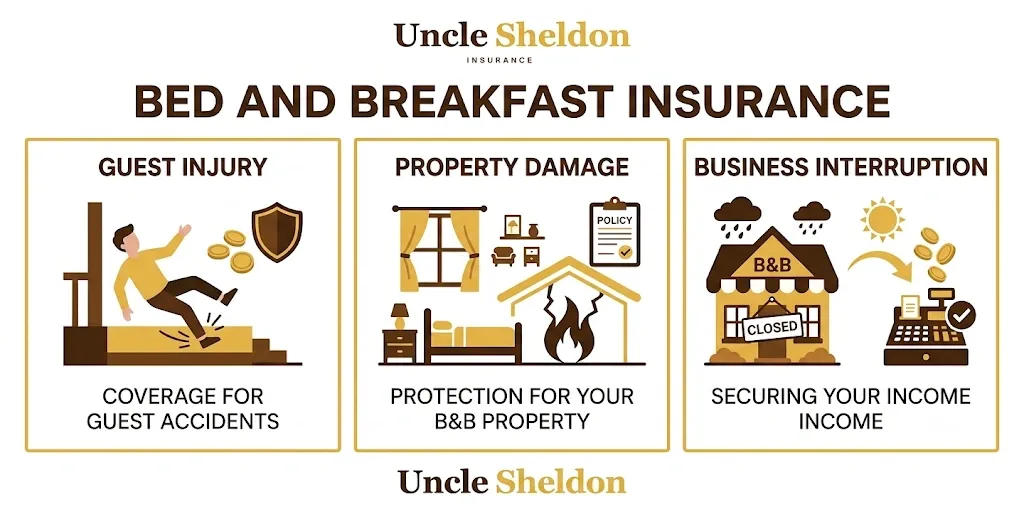
This is the foundation of protecting your building. If a kitchen fire breaks out while you are cooking breakfast, or a severe winter storm causes a massive oak tree to crash through the roof of your guest wing, commercial property insurance is what pays to rebuild the structure.
But for a bed and breakfast, you have to look closely at how the policy values your property. You absolutely want replacement cost coverage rather than actual cash value. If an antique stained glass window is shattered, actual cash value is only going to give you what a depreciated, old window is worth today, which is probably almost nothing. Replacement cost pays what it actually costs to go out and buy a brand new equivalent window, or to hire the specialized craftsman needed to recreate the historic detail.
You also have to think about the contents of the house. A B&B is usually filled with higher-end furnishings, expensive linens, custom art, and specialized kitchen equipment. Commercial property coverage protects all of that tangible stuff from fire, theft, and severe weather damage. You need to make sure the limit you set for your property actually reflects what it would cost to completely restock the house if a fire took everything to the ground.
Historic Property Considerations
If your bed and breakfast is in a registered historic building, the property coverage gets more complex. Many local ordinances require that if a historic building is damaged, it must be rebuilt using historically accurate materials and methods. You can’t just slap up cheap drywall where hand-plastered walls used to be.
This usually means the cost per square foot to rebuild is substantially higher than a standard modern home. You need to make sure your property policy includes ordinance or law coverage, which helps cover the increased costs of complying with strict building codes or historic preservation requirements during the rebuilding process. If you skip this, you could find yourself paying out of pocket for the massive difference between standard construction and historically accurate reconstruction.
The Liability Risks of Hosting
When you invite people onto your property and charge them money, your legal liability goes through the roof. People are unpredictable, and accidents happen in even the most meticulously maintained homes.
General Liability
This is the non-negotiable core of your liability protection. General liability covers you if a guest, a delivery driver, or a contractor gets physically injured on your property, or if their property is damaged.
The classic example is a slip and fall. If a guest trips on a loose rug in the hallway or slips on an icy front step during the winter and breaks an ankle, general liability covers their medical bills. Crucially, if they decide to sue your business for negligence, this policy covers your legal defense costs and any settlement or judgment against you.
Defending a bodily injury lawsuit is crushingly expensive, even if the guest was just being clumsy and you did nothing wrong. General liability is the shield that keeps a single clumsy guest from bankrupting the business.
Product Liability and Food Risk
Almost every B&B serves food—it’s right there in the name. Whether it is a full, scratch-made hot breakfast or just a continental spread of pastries and coffee, serving food introduces product liability risk.
If a guest gets severe food poisoning from a bad batch of eggs, or has a major allergic reaction because a muffin was cross-contaminated with nuts in your kitchen, product liability steps in. It handles the medical claims and legal defense if they sue you over the illness. This coverage is usually bundled into your general liability policy, but it is critical to verify that food-related claims are actually covered.
Coverage Unique to the B&B Model
A bed and breakfast isn’t quite a hotel, but it faces some very similar hospitality-specific risks that generic business policies completely ignore.
Innkeepers Liability
When guests stay with you, they bring expensive things into your home. Laptops, jewelry, cameras, and high-end luggage are sitting in your rooms while they are out exploring the town.
What happens if a room is burglarized, or if a member of your cleaning staff accidentally damages a guest’s expensive camera while making the bed? Standard property insurance covers your stuff, not the guest’s stuff. Innkeepers liability is a specific coverage that protects you if a guest’s personal property is damaged, lost, or stolen while it is in your care, custody, and control.
State laws vary wildly on how much an innkeeper is legally responsible for a guest’s belongings, but having this coverage means you aren’t paying out of pocket to replace a stolen laptop just to avoid a nasty lawsuit and terrible online reviews.
Business Interruption
This is arguably the most important coverage for the long-term survival of your B&B.
Let’s say a pipe bursts on the second floor and floods three of your primary guest rooms. Your property insurance pays to fix the plumbing, tear out the wet drywall, and replace the ruined carpets. But the repairs are going to take two months. During those two months, you have to cancel all the reservations for those rooms and refund the deposits. You have zero income coming in, but you still have to pay the mortgage, the property taxes, and your core staff.
Business interruption insurance replaces your lost net income and covers those ongoing fixed expenses while the business is forced to close due to a covered property claim. It keeps the business financially afloat while the physical damage is being repaired. Without it, many owners are forced to walk away from the business because they simply can’t survive months of zero revenue while still paying the bills.
Managing the Staff and Extras
If you run the B&B completely by yourself, your needs are simpler. But the moment you hire help or add extra amenities, the risk profile changes.
Workers Compensation
If you hire housekeepers, a breakfast cook, or someone to manage the grounds, you almost certainly need workers compensation insurance. It covers their medical bills and lost wages if they get injured on the job.
Housekeeping is surprisingly hard physical labor. A cleaner throwing out their back while flipping a heavy mattress, or slipping on a wet bathroom floor, are very common claims. Workers comp protects the employees, but it also protects the business because an injured employee who receives these benefits generally cannot sue the B&B directly for the injury.
Liquor Liability
Many high-end bed and breakfasts offer a complimentary glass of wine at check-in, or perhaps host a small evening reception with local beers. If you are serving alcohol, even if you aren’t explicitly charging for it by the glass, you have liquor liability risk.
General liability policies typically exclude claims related to alcohol. If a guest drinks too much wine at your evening reception, decides to drive into town for dinner, and causes a severe car accident, the victims can sue your business for overserving them under state dram shop laws. Liquor liability coverage handles the massive legal defense costs and settlements associated with these incredibly messy lawsuits.
Keeping the Business Grounded
Putting together the right insurance for a bed and breakfast is really about identifying the specific ways your property operates and patching the holes.
You need to be completely transparent with your insurance provider. If you live in the building year-round while hosting guests, they need to know that so they can properly blend commercial and personal coverage. If you host small weddings or events in the garden on weekends, that changes the liability picture significantly and requires specific endorsements.
Take a hard look at your deductibles. Choosing a higher deductible on the property policy can save you quite a bit on the monthly premium, but you have to be honest about your cash reserves. If coughing up a $5,000 deductible to fix storm damage would financially cripple the business during the slow season, it is better to pay the higher premium for a lower deductible.
Running a B&B is intense, deeply personal work. You are responsible for the physical safety and comfort of strangers every single night. The insurance is just there to build a quiet wall around the property and the business checking account, so that when a pipe bursts or a guest trips on the stairs, it remains an annoying problem to solve, rather than a financial disaster that forces you to close the doors for good.